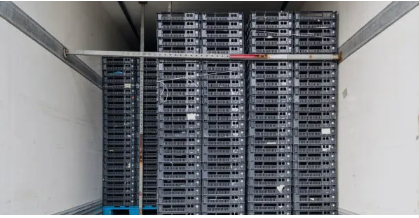
Australia’s cold storage and refrigerated logistics sector plays a critical role in supporting national food security, export markets, and supply chain resilience. From meat processors in Queensland to seafood exporters in Tasmania and fresh produce distributors in Victoria, maintaining consistent freezer temperatures is essential. One often overlooked but highly effective solution is the use of pallet freezer spacers, which are specifically designed to optimise airflow and temperature control in freezer environments.
Within the first stages of cold storage, pallet freezer spacers help address a common challenge in Australian freezer facilities: uneven air circulation caused by tightly stacked pallets. Without adequate spacing, cold air cannot move freely, leading to inconsistent temperatures, prolonged freezing times, and potential product degradation. By creating uniform gaps between pallets, spacers support efficient freezer performance across a wide range of Australian operating conditions.
Understanding the Purpose of Pallet Freezer Spacers
The primary purpose of pallet freezer spacers is to improve airflow within cold storage environments. In blast freezers and long-term storage freezers, cold air must circulate evenly around all palletised goods. When pallets are placed directly against one another, airflow is restricted, resulting in “hot spots” where products may not freeze or remain frozen at the required temperature.
In Australia, where food safety regulations are stringent and export standards are tightly enforced, this risk can have serious commercial implications. Pallet freezer spacers help mitigate these risks by ensuring cold air reaches all sides of the load. This supports uniform freezing, reduces the risk of spoilage, and helps operators meet HACCP, FSANZ, and export compliance requirements.
Beyond airflow, pallet freezer spacers also serve a protective function. They reduce direct contact between pallets, minimising damage to packaging and pallet structures during freezing and retrieval. This is particularly relevant in high-volume Australian distribution centres that rely on rapid pallet handling and automated racking systems.
Key Uses Across Australian Industries
The use of pallet freezer spacers is widespread across several Australian industries. Meat processing facilities use them to ensure carcasses and boxed meat freeze evenly before domestic distribution or overseas shipment. Seafood processors rely on controlled freezing to maintain texture and quality, especially for export to Asia, Europe, and North America.
In horticulture, frozen fruits and vegetables require consistent temperature management to preserve colour, nutritional value, and shelf life. At this stage, pallet freezer spacers play a vital role in maintaining product integrity from the farm gate through to retail or export terminals. Dairy manufacturers also benefit from improved airflow, particularly when storing butter, cheese, and ice cream in large-scale freezer warehouses.
Cold storage providers servicing multiple clients across Australia increasingly standardise spacer use to maintain consistent performance across diverse product categories. This standardisation simplifies warehouse procedures and supports predictable freezer performance year-round.
Supporting Energy Efficiency and Cost Control
Energy efficiency is a growing concern for Australian cold storage operators due to rising electricity costs and sustainability targets. Poor airflow forces freezer systems to work harder to maintain set temperatures, increasing energy consumption and operating expenses.
By improving circulation, pallet freezer spacers help freezers reach and maintain target temperatures more efficiently. This can reduce compressor run times, lower energy usage, and extend the lifespan of refrigeration equipment. Over time, these efficiency gains can translate into measurable cost savings, particularly for large 24/7 facilities.
Additionally, consistent freezing reduces the need for rework, product disposal, or quality investigations, further strengthening operational efficiency. When used correctly, pallet freezer spacers become a low-cost intervention with a high return on investment for Australian cold storage operations.
Compliance and Food Safety Benefits
Australia’s food safety framework places a strong emphasis on temperature control throughout the supply chain. Whether products are destined for domestic supermarkets or international markets, traceability and temperature consistency are non-negotiable.
Pallet freezer spacers support compliance by helping operators demonstrate that adequate airflow and freezing practices are in place. This is particularly important during audits by regulatory bodies or third-party certification schemes. Proper pallet spacing can also help meet customer specifications, especially for export contracts that require documented freezing performance.
In high-risk environments, such as export abattoirs or seafood processing plants, the use of spacers adds an additional layer of risk management. By reducing temperature variation, operators can be more confident in product safety and shelf-life outcomes.
Practical Considerations for Australian Facilities
When selecting pallet freezer spacers, Australian businesses should consider factors such as freezer size, pallet configuration, and load weight. Spacers must be durable enough to withstand sub-zero temperatures and repeated handling. They should also be easy to clean to support hygiene standards in food-grade environments.
Training staff on correct placement is equally important. Incorrect use can reduce effectiveness and undermine the benefits of airflow. Many Australian facilities integrate spacer use into standard operating procedures to ensure consistency across shifts and locations.
As cold chain demand continues to grow, particularly with increased exports and online grocery delivery, pallet freezer spacers will remain an essential component of efficient freezer design and operation.
Conclusion
The purpose and use of pallet freezer spacers extend well beyond simple pallet separation. In the Australian context, they support airflow optimisation, energy efficiency, regulatory compliance, and product quality across multiple industries. By incorporating pallet freezer spacers into cold storage operations, Australian businesses can strengthen freezer performance, reduce operational risks, and protect the integrity of temperature-sensitive goods throughout the supply chain.